
Personalization has moved from a marketing promise to an operational reality in aviation. Airlines are expanding meal choice, letting passengers decide weeks in advance what they will eat, and building service concepts around individual preference rather than a single standard offer.
Lufthansa Group’s Culinary Journey bundles digital menus, pre-ordering and feedback into one connected experience across Lufthansa, SWISS and Austrian Airlines, with up to nine main courses available on some long-haul flights. Its Future Onboard Experience program, FOX, extends the same logic to the wider soft product, including dining on demand for the second service in Business Class. ANA has approached personalization from a different angle, adding a Quick and Light Meal option and a No Thank You option, so passengers can also choose less, or nothing at all.
Choice is becoming a designed part of the journey, not an exception handled by the crew. That raises a practical question. How do airlines make personalization visible? The answer is not more complexity. It is smarter design.
Today, personalization stops at the tray
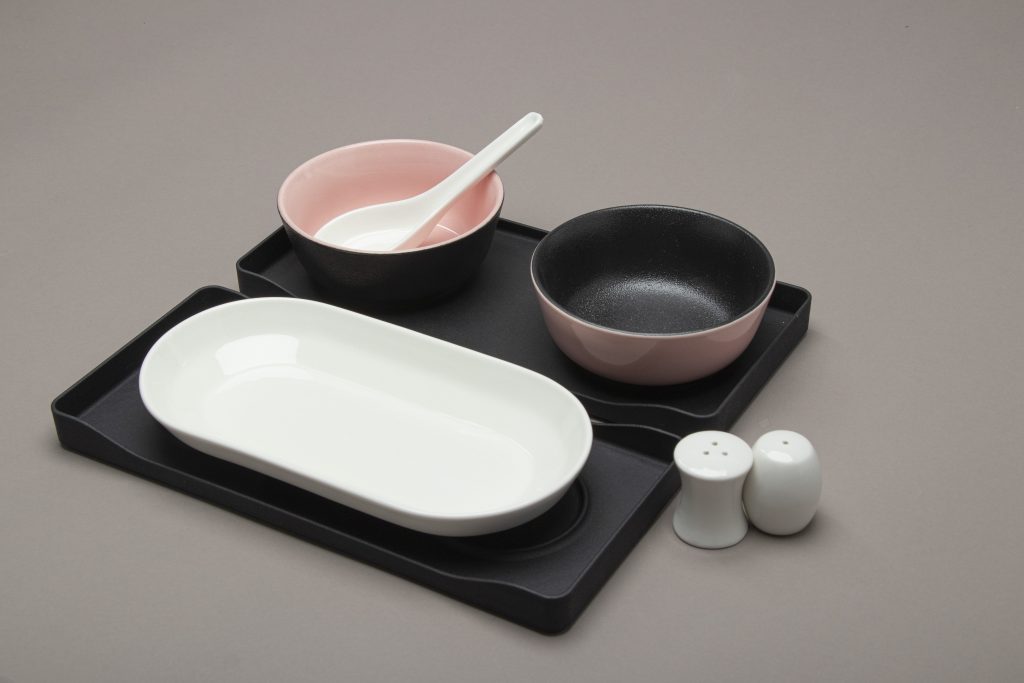
Passengers increasingly choose what they eat. In many cabins, the presentation of that choice remains largely unchanged. A wellness meal, a vegetarian option and a premium chef curated menu may all arrive in the same casserole, on the same tray, under the same lid. The decision a passenger made three weeks earlier in an app disappears at exactly the moment it should be rewarded.
The challenge extends beyond food packaging. A passenger selecting a chef curated menu or a destination inspired dining experience may expect a different style of presentation too. Many airlines still deliver these meals on identical tableware. The food changes, but the dining experience does not.
JetBlue illustrates the same pattern from a different angle. Its Blueprint by JetBlue platform now lets passengers flag food allergens directly through the seatback screen, and its Mint cabin rotates in chef partnerships with vegetarian, nut-free, dairy-free and gluten-free options built in. The personalization layer is expanding through digital tools and menu variety. The presentation layer has not moved with it.
At deSter, we believe the next step is to align meal presentation with meal choice. That does not require separate equipment for every menu. It requires modular packaging, serviceware and presentation concepts designed for variation from the start: a single meal container platform used across several menu concepts, color palettes that distinguish wellness, premium or seasonal menus, menu specific sleeves and tray top accessories, and premium tableware accents that elevate selected menus without a separate service system.
The passenger experiences a more personal meal. Catering and cabin operations maintain a common platform.
Designed with the caterer, not around them
The strongest personalization concepts are developed jointly. Packaging and serviceware designed in isolation often solve one challenge while creating another elsewhere in the operation.
Consider a caterer building three menus: wellness, signature regional cuisine and premium chef selection. The instinctive answer is three separate equipment systems. The better answer is one common operational platform, enhanced through presentation. The same bowl, dish or meal container can run through all three concepts, with colors, materials and tableware details creating the differentiation. Loading patterns, trolley configurations, galley space and dishwashing routines stay unchanged.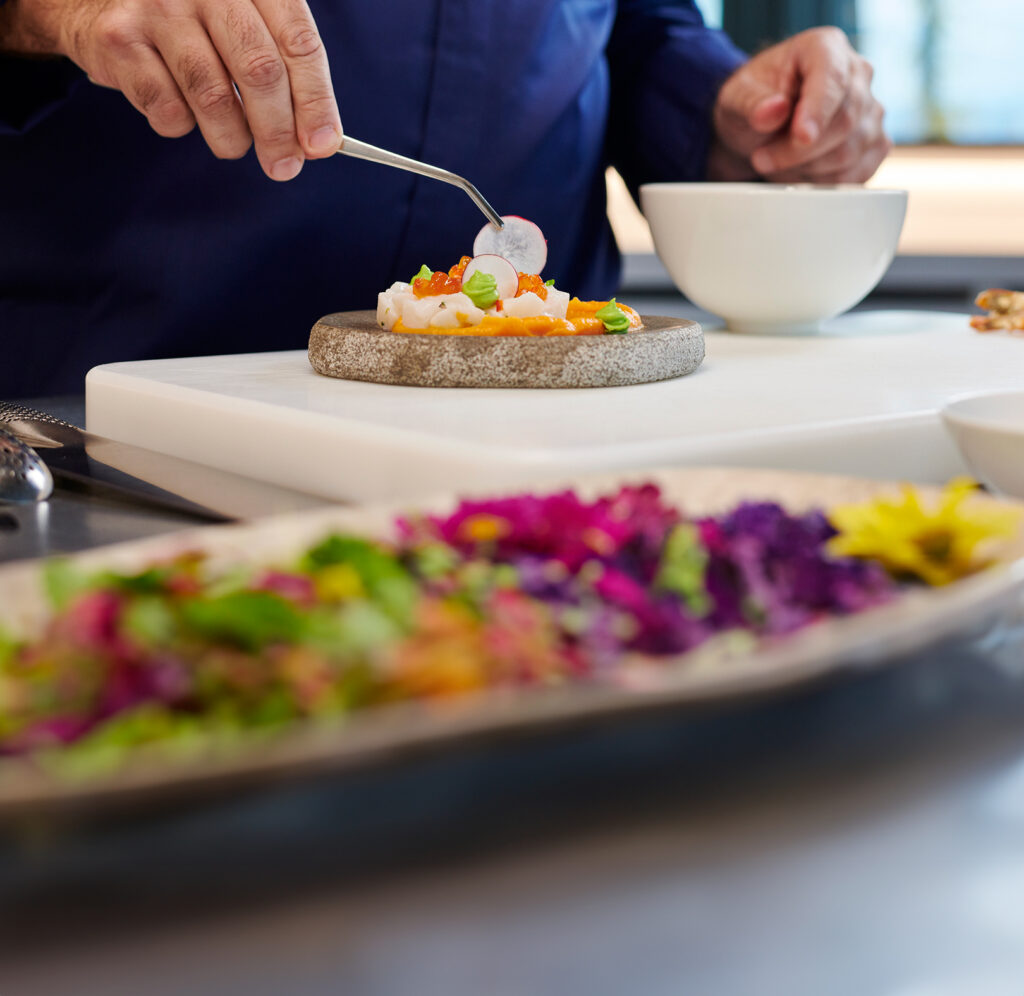
As part of gategroup, deSter works alongside catering operations day to day. That proximity shapes how we approach presentation. Solutions have to work in the galley before they work in the design review.
Making personalization tangible
Passengers remember more than the meal itself. They remember the weight of a bowl, the feel of a cup and the way the service is delivered.
Packaging and serviceware can carry personalization through several mechanisms, each with a different cost and timeline: menu specific colors for immediate recognition without new tooling, seasonal collections that refresh the experience without redesigning the full concept, destination storytelling tied to a route or culinary theme, and premium differentiation, such as ceramics or distinctive bowls, that makes service levels visible through design rather than added complexity.
Material and design language should support sustainability objectives with documented life cycle facts, not implied claims. A reusable component with a documented life cycle tells a stronger story than a printed sustainability message on a single use item. When designed within a common operational platform, these elements strengthen the passenger experience without adding complexity for caterers and cabin crew.
Making individualization scalable
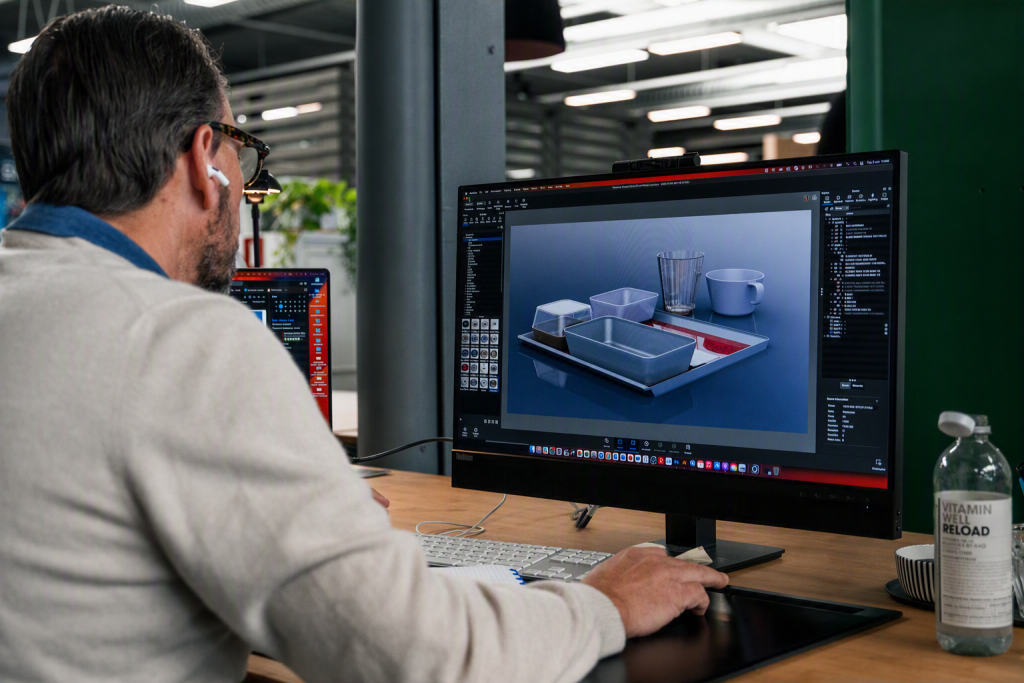
The central challenge is delivering a more individual experience without adding cost, weight or complexity. Load factors continue to run at historically high levels, and fuller aircraft leave little room for service concepts that slow delivery or increase loading requirements. Personalization must fit within the existing operational framework.
Packaging and serviceware design become strategic levers here, not finishing touches. Instead of many unique solutions, airlines can build flexible dining ecosystems based on common equipment platforms, modular presentation elements, and differentiation through color and design rather than new tooling.
The efficiency benefit that is easy to overlook
Personalization also creates an operational advantage that rarely becomes part of the passenger facing story. Pre-ordering gives caterers better demand visibility, reducing overproduction and food waste. Correctly sized portions, reusable components and clear visual differentiation between meal concepts help reduce waste and minimize handling errors onboard. Personalization and resource efficiency reinforce one another when designed together.
Where to start
Three questions usually reveal whether a personalization concept will succeed in practice.
- Can the differentiation be achieved without a new tool or equipment family?
- Does the concept change loading, galley handling or dishwashing processes?
- Would a passenger immediately recognize the difference between two meal concepts without reading a label?
- A fourth question is becoming just as important:
Does the presentation feel as personalized as the menu selection itself?
The opportunity ahead
Airlines are investing heavily in choice. The physical layer that delivers that choice has not always kept pace. Passengers select a meal digitally. They experience it physically. Everything between the app and the tray table is design work.
Working closely with airlines and catering partners across gategroup, deSter translates menu concepts into packaging and serviceware solutions that make personalization visible, memorable and operationally efficient. Individualization is not only about offering more choice. It is about making every choice feel intentional, down to the packaging, tableware and presentation that bring the dining experience to life.
Curious how this could work for your onboard program? Get in touch to start the conversation.