
If you ask most people what they think about cutlery, the answer is probably: not much.
And that’s exactly the point: we rarely think about it, yet cutlery is one of the products people interact with most during a meal.
But beyond its practical function, it is a tangible part of the dining experience and contributes to how a brand is perceived.
At deSter, we’ve spent more than 50 years designing and manufacturing tableware solutions, including cutlery, for airlines and foodservice operators. In fact, our story began in 1973 with a simple product: a small fork designed to serve fries.
More than five decades later, one thing remains remarkably clear: a fork is never just a fork.
The end of plastic changed the conversation
Single-use plastic transformed modern travel catering and foodservice by solving real challenges. It was lightweight, hygienic, affordable, and easy to distribute on a scale.
Then, environmental concerns, changing consumer expectations, and regulations such as the EU Single-Use Plastics Directive began to reshape the market.
Initially, the discussion focused on materials. What should replace plastic? Paper? Wood? Reusable alternatives?
But from our perspective, the real challenge was never simply replacing plastic. It was finding ways to carry the same principles of usability, quality, and brand expression into new materials.
Customers still expect a sturdy fork, an effective knife, and a comfortable dining experience. Sustainability may have changed the requirements, but it hasn’t changed expectations.
Over the years, this shift has taught us a few important lessons.
Lesson 1: Material doesn’t determine quality
One of the biggest misconceptions we encounter is that choosing material also tells you what level of quality to expect. Whether paper, wood, reusable plastic, or stainless steel, products that appear similar in a catalog can deliver very different user experiences.
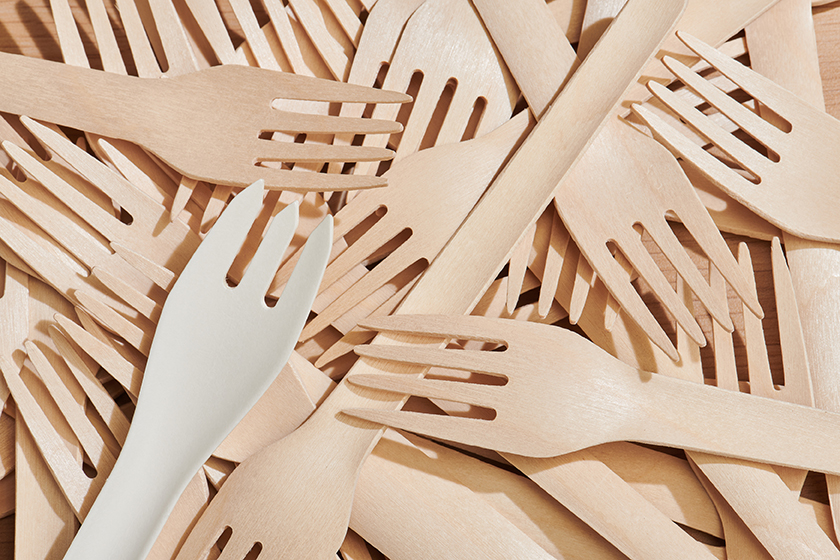
We’ve seen this firsthand through our own paper cutlery manufacturing operations in Belgium. Fiber selection, product design, production methods, testing procedures, and quality controls all influence the final result.
The same applies to wood cutlery. By working closely with our suppliers on material selection, production standards, and finishing quality, we ensure that the products we offer meet our expectations for quality and performance.
Ultimately, customers don’t judge a product by its material. They judge it by how it performs during a meal. Whatever the material, quality comes down to how the product feels and performs in use.
That’s what matters.
Lesson 2: Sustainability only works when performance comes first
The travel catering and foodservice industries have made tremendous progress in developing more sustainable cutlery solutions.
But sustainability alone doesn’t guarantee success.
We’ve learned that sustainability and performance should never be treated as separate conversations. The most successful solutions balance environmental responsibility, operational practicality, and user experience.
Because if people don’t want to use a product, it doesn’t matter how sustainable it is.
Lesson 3: Innovation often starts with listening
When people think about innovation, they often imagine breakthrough technologies or revolutionary new materials.
In our experience, some of the most valuable innovations start with customer feedback.
Different customers have different priorities. Some focus on premium dining experiences. Others need to balance performance, sustainability, and budget targets. Listening to these realities has shaped decades of product development.

Sometimes innovation means creating something entirely new. More often, it means refining what already exists: improving ergonomics, optimizing dimensions, or reducing material usage without compromising performance.
At deSter, this philosophy is embedded in deStudio, where designers, engineers, and product managers work together to turn customer feedback into practical improvements. Combined with our manufacturing expertise, this allows us to develop solutions that balance user experience, performance, and real-world production requirements.
Because when millions of units are used every year, even the smallest design decision can have a significant impact.
Lesson 4: There is no universal cutlery experience
Perhaps the most important lesson is that no single solution fits every application.
A premium airline cabin has very different requirements from a stadium, festival, or corporate restaurant. Stainless steel may be the best choice in one environment, while reusable, paper or wood alternatives may make more sense in another.
The same applies across markets. Through customer feedback, we’ve learned that eating habits can translate into very specific cutlery preferences. From ergonomics and proportions to the way a fork, knife, or spoon performs, expectations can vary significantly across cultures. These details may seem small, but familiar eating rituals contribute to how natural and enjoyable a dining experience feels.
The best solution is rarely universal; it depends on the people, the meal, and the environment in which it will be used.
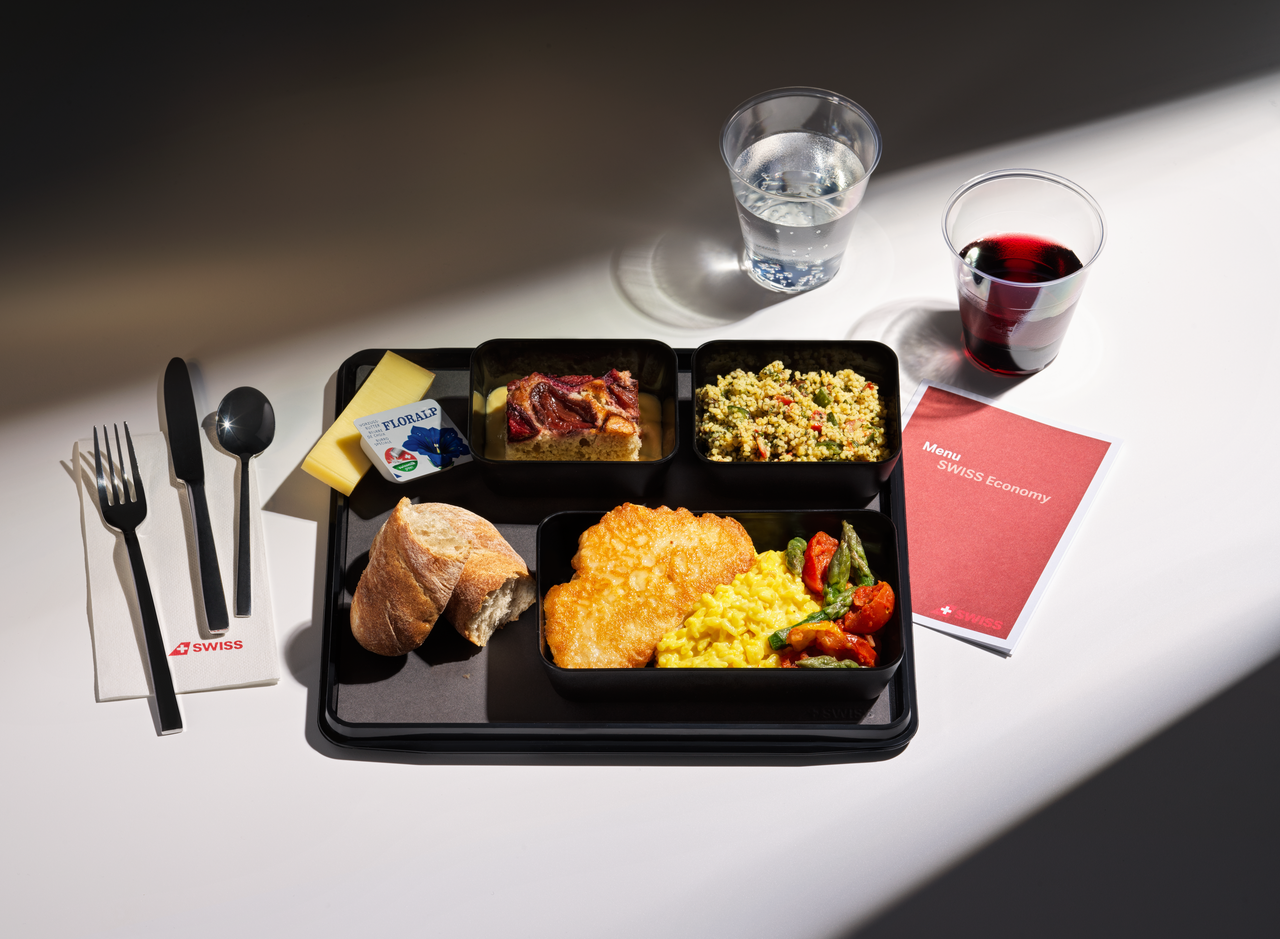
From a fries fork to the future
It’s fitting that deSter’s first manufactured product in 1973 was a small fork for serving fries.
Today, cutlery remains an important part of our product portfolio and expertise. Materials have evolved. Customer expectations have shifted. Sustainability has become an essential consideration.
But one thing has remained remarkably consistent: a fork is never just a fork. It is the result of hundreds of decisions that most people never notice, but every customer experiences.
The future of cutlery will not be defined by a single material replacing another. It will be defined by customer needs.
And those needs go far beyond functionality. Cutlery supports the dining experience, reflects the expectations of the people using it, and even contributes to how a brand is perceived.
If you’re currently evaluating cutlery, service packs, or meal essentials for your travel or foodservice operation, we’d love to continue the conversation and share what we’ve learned along the way. Get in touch with our team to discuss your next travel or foodservice project.